



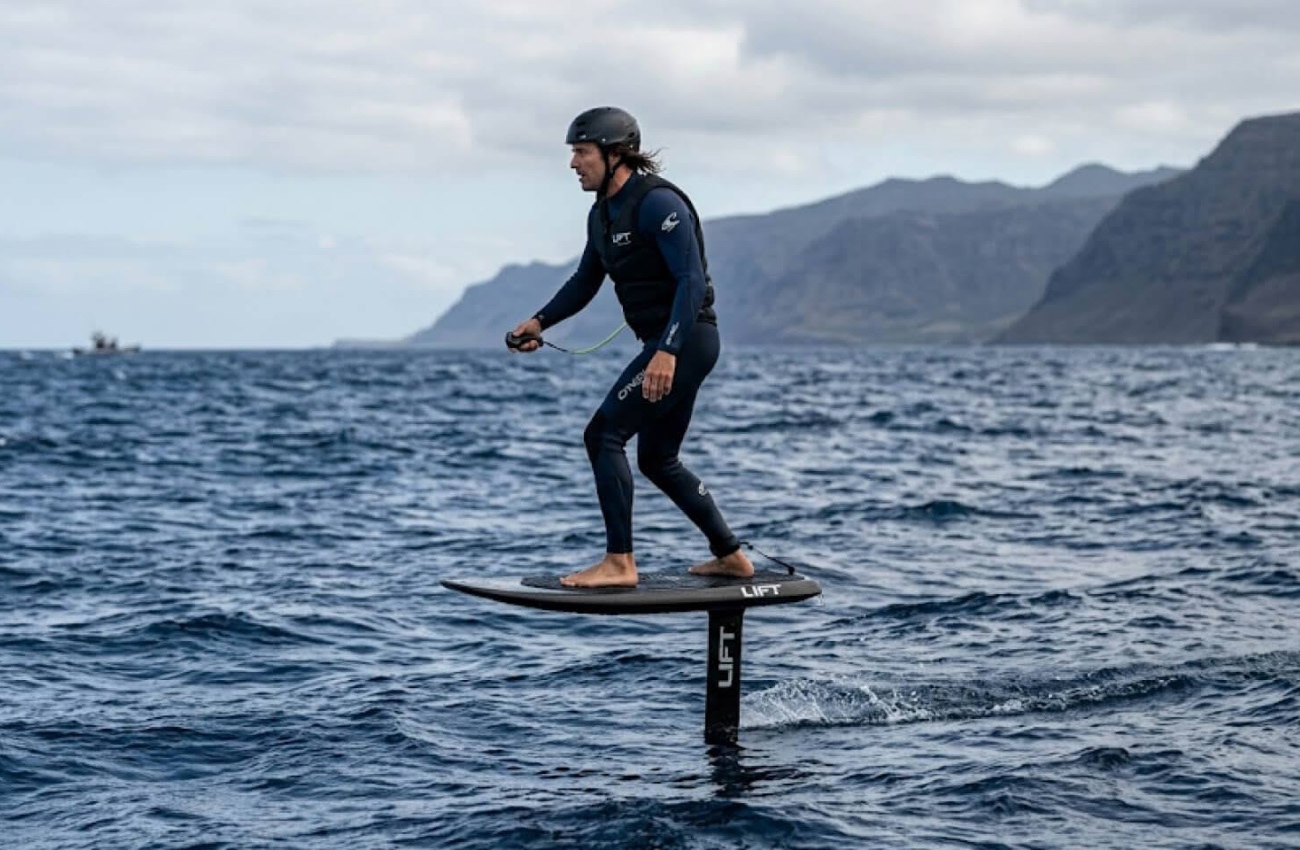
Efoil in Thailand: A Beginner’s First Session on an Electric Foilboard
You’re standing in knee-deep water, a board the size of a shortboard under your arm, and there’s no wind. No waves. The surface is flat. And somehow, in about forty minutes, you’re going to be flying above it.
That’s the part nobody warns first-timers about: efoil doesn’t need conditions. It generates its own lift through the hydrofoil beneath the board and an electric motor that runs almost silently. Whether the ocean is glassy or choppy, the experience works. That independence from weather is one of the reasons e-foil surfing has taken off so quickly across Thai islands, where wind is seasonal but warm tropical water is available year-round.
Gear & Basics: What to Expect in Your First eFoil Lesson
Every first session starts on dry land, not in the water. The theory portion takes ten to fifteen minutes and covers three things: how the throttle works, how weight shifts affect the board’s altitude, and what to do when you fall. Falls are part of it, especially early, and instructors build that expectation in from the start.
The gear laid out before you is more substantial than expected. A helmet, a buoyancy vest, a lycra suit, and a small radio receiver that stays on you during the session. That last item matters more than it sounds. The instructor communicates with you through the radio while you’re in the water, which means real-time feedback at the exact moment you need it rather than shouted corrections from the shore. It’s closer to having someone standing next to you than to watching a video and hoping for the best.
The board itself is wider than a performance shortboard, with a mast roughly 70 cm long dropping below the waterline. At a water depth of around 1 to 1.5 metres, the foil clears the bottom and you have enough room to work with. The motor runs on a rechargeable battery that gives about 90 minutes of ride time.
Finding Your Balance: The First Flight on Foil
The first thing most riders feel is resistance. You’re prone on the board, throttle in your hand, and the instinct is to squeeze hard and go fast. That’s usually wrong. The board responds to small inputs, and the lift comes from the foil finding the right angle, not from raw speed.
Somewhere between the ten-minute and thirty-minute mark, something shifts. The nose comes up. The board rises a few centimetres. For most people, that’s when the rational mind goes quiet and everything becomes about balance, not analysis. More than 80% of students during their first electric foil surfing lesson reach that point and don’t come back down willingly.
One of the most common things instructors notice at this stage: riders forget to breathe. The lift is quiet, the water drops away, and there’s a second of genuine suspension before the body catches up with what’s happening.
Where in Thailand conditions actually work for beginners
Thailand offers two distinct windows for efoil sessions, and they don’t overlap in the same way. Phuket’s beaches at Kata and Soi Phon Chalong run best from April through October, when the Andaman side is calmer and the bay is protected. The water is warm, the fetch is short, and there’s a consistent shallow area for newcomers to find their footing. Anyone planning efoil surfing on Koh Phangan through Chaloklum Beach gets a different setup entirely: a natural bay on the island’s northern tip that stays sheltered year-round, with November through March being the peak period. It’s a practical option for travelers who can’t plan around a fixed weather window.
EasyFlyFoil runs both locations with the same equipment standard: foil boards capable of reaching 50 km/h, though first sessions stay well below that ceiling. A first lesson runs 60 minutes with an instructor, safety gear, and phone filming included, at 3,500 THB. The progression pace is set by the student, not a fixed syllabus.
What the second session changes
If the first lesson is about getting lift, the second is about keeping it. The intermediate session shifts focus to edge control, throttle management through turns, and reading the foil’s feedback rather than reacting to it. Students who come back within a day or two of their first session typically have a significantly shorter adjustment period.
The price for a second session drops to 2,000–3,500 THB, and most people who go through both find themselves asking about the five-day package before the second session ends. That programme, starting at 8,500 THB, is designed to take someone from lying prone on flat water to riding upright with confidence.
It’s not fast by surf standards, where months of paddling come before standing. Efoil compresses that timeline considerably. Whether you’re joining from efoil in Phuket or arriving at Koh Phangan after a ferry from Samui, the learning curve on the first day looks roughly the same.
One practical note before booking
Equipment limits are worth knowing before you arrive. Maximum rider weight for EasyFlyFoil boards is 100 kg. The minimum water depth needed during a session is 1 to 1.5 metres. Neither of these constraints affects the average first-timer, but they’re worth confirming if you’re at the upper weight range or planning to ride somewhere unusually shallow.
The school operates in Russian, Ukrainian, English, and Thai, which removes most of the communication friction that can slow down an otherwise straightforward first lesson.
The flying part starts faster than almost everyone expects. The hard part is getting out of the water afterwards.

E-foil surfing instructor
Hello, fellow sailors! My name is Anton and I am your guide in the world of surfing. Let’s dive into the waves together!